

Ethylene vinyl acetate (EVA) is one of the most versatile engineering polymers. Combining the toughness and processability of polyethylene (PE) with the flexibility and resilience of rubber, EVA is a copolymer produced by combining ethylene with vinyl acetate.
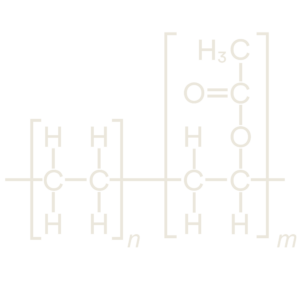
EVA offers an excellent balance of performance characteristics by varying the proportion of vinyl acetate making it suitable for a wide range of manufacturing applications.
However, not all EVA grades are the same!
What is EVA?
Depending on the grade selected, EVA can offer:
- Excellent flexibility and softness
- High impact resistance, even at low temperatures
- Good stress crack resistance
- Strong chemical resistance
- Excellent clarity and gloss
- Good sealing performance
- Easy processing using conventional extrusion and injection moulding techniques
These characteristics make EVA suitable for applications ranging from industrial components and automotive parts to medical devices, footwear and consumer products.
Why does vinyl acetate content matter?
The percentage of vinyl acetate within the material has a direct influence on the physical properties of EVA.
In simple terms:
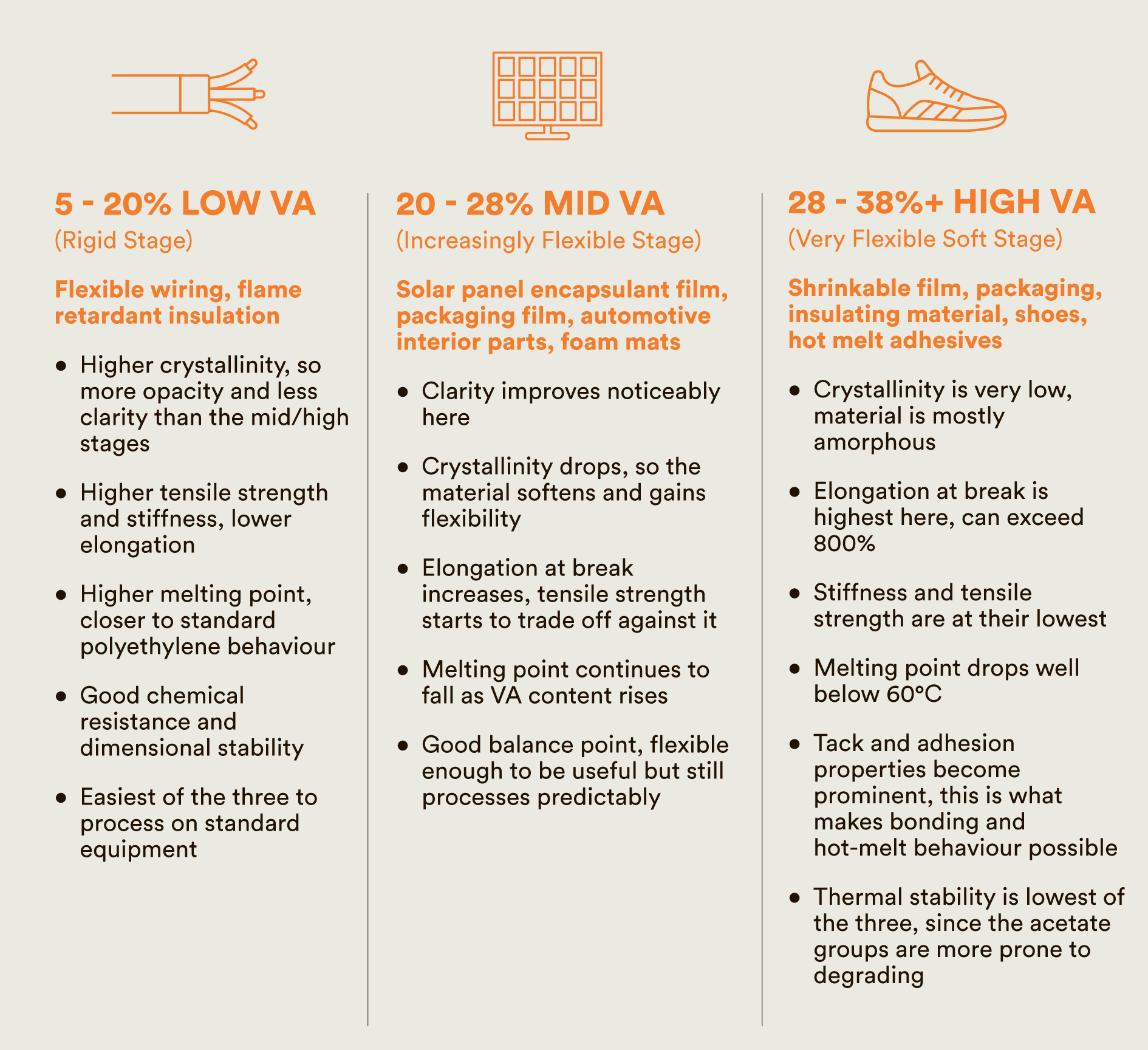
- Lower VA content behaves more like polyethylene, offering greater stiffness, hardness and chemical resistance.
- Higher VA content produces a softer, more flexible material with improved elasticity, transparency and impact performance.
Selecting the appropriate VA content ensures the material delivers the right balance of mechanical performance, flexibility and processing characteristics for the intended application.
Choosing the right EVA grade
There is no single “best” EVA grade – only the most suitable grade for a specific application. You’ll likely have handled EVA grades before. Low VA grades turn up in cable and wire insulation. Move up the scale and you find film for packaging and solar panel encapsulation. Higher again, EVA becomes the foam in trainers and sports padding. Higher still, and EVA acts as the base polymer in hot melt adhesives, and additives to increase flexibility and thermal resistance of road markings. Same material, but very different jobs, all down to how much vinyl acetate is in the mix.
Questions worth considering include:
- Does the component need to be flexible or rigid?
- Will it be exposed to repeated impact or stress?
- Is clarity or appearance important?
- Does it need excellent sealing performance?
- What manufacturing process will be used?
- Are there temperature or environmental considerations?
Answering these questions early helps narrow down the available grades and ensures the material performs as expected throughout the product’s life. This will be discussed in our next EVA post, where we will offer a useful guide to selecting grades for your application.
Each application makes different demands on the material, making grade selection an important part of the design process.
Technical support from Hardie Polymers
Selecting the right polymer involves much more than simply choosing a material from a datasheet.
As an independent polymer distributor, we work with manufacturers across multiple industries to source the most appropriate EVA grade based on your technical, processing and commercial requirements. Whether you’re looking for improved flexibility, enhanced impact resistance or a specific vinyl acetate content, we can help identify the right solution from a broad network of trusted suppliers.
Need help selecting the right EVA?
Our EVA specialist, Matthew Crabbe, is here to discuss your application, explain the differences between grades and help you find the most suitable material for your manufacturing process.
Just give us a call to discuss your application and discover how the right EVA grade can help optimise product performance, processing efficiency and long-term value.